Habit Stacking on Two Wheels: Building Cycling Into Errands You Already Run
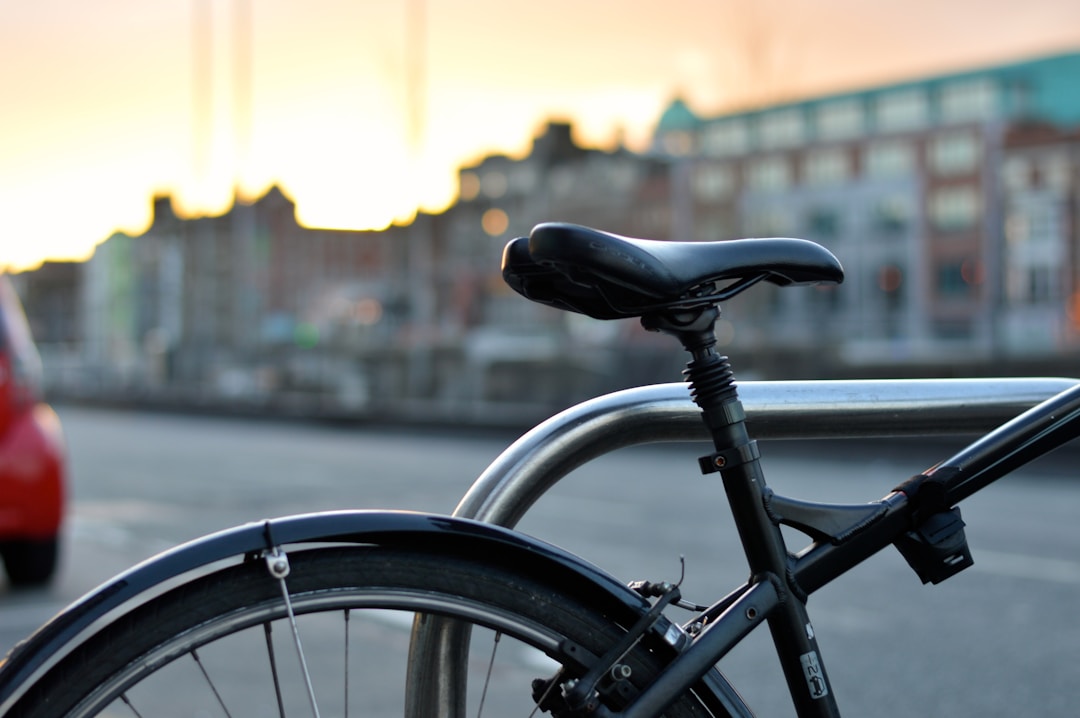
Most people who want to cycle more do not have a fitness problem. They have a scheduling problem. The bike sits in the shed, or the hallway, or under the stairs behind a pushchair and a box of Christmas decorations, waiting for a Sunday morning that keeps failing to arrive. Meanwhile, the same person drives half a mile to the chemist on Tuesday, drives to the Post Office on Wednesday to return something bought online, and drives to the shop on Friday because someone finished the milk.
Those three trips are the interesting ones. Not because they are especially long or especially frequent, but because they are already locked into the week. Nobody has to be persuaded to collect a prescription. It simply happens, reliably, without a motivational push. And that reliability is precisely what a new habit needs to attach itself to.
Habit stacking is the practice of bolting a behaviour you want onto a behaviour you already perform automatically. It works because the existing habit supplies everything the new one lacks: a trigger, a time slot, and a reason to leave the house. Research published in the European Journal of Social Psychology by Lally and colleagues at UCL found that new behaviours took a median of 66 days to become automatic, with a spread running from 18 days to 254 days depending on the behaviour and the strength of its cue. Applied to cycling, it flips the usual approach on its head. Instead of carving out fresh time for a ride, you take journeys that already exist and change how they happen.
This is not about becoming a cyclist in the Lycra-and-Strava sense. It is about the ordinary, slightly boring trips that make up a surprising share of UK car use — journeys under two miles that soak up fuel, parking charges and patience in roughly equal measure. The Department for Transport's National Travel Survey for 2024 found that 25% of all trips in England were under one mile and 70% were under five miles, and that of those journeys between one and five miles, 68% were made by car or van compared with just 19% on foot.
What follows is a practical framework: why errands make unusually strong anchors, how to work out which of yours are genuinely suited to two wheels, how to set up your home so departure takes seconds rather than minutes, and how to chain several stops into a single loop — including the honest question of when to leave the bike where it is.
The Prescription Beats the Personal Best: Why Errands Anchor Better Than Ambitions
Ask someone why their cycling plan collapsed and you will rarely hear a story about physical limits. You will hear about a wet Tuesday, a late meeting, a weekend that got eaten by other people's arrangements. The plan did not fail because riding was hard. It failed because riding was optional.
That is the central weakness of goal-led cycling. A target — three rides a week, a hundred miles a month — has to be defended daily against everything else competing for the same hours. Every single day, you renegotiate. And renegotiation, repeated often enough, has only one outcome.
An errand does not negotiate. The prescription needs collecting whether you are in the mood or not.
What an anchor actually supplies
Behaviour scientists call the existing habit an anchor, and the useful thing about a good anchor is how much administrative work it does on your behalf. Consider what "I'll cycle more this year" gives you: nothing but intent. Now consider what "the parcel needs returning to the drop-off point by Thursday" gives you.
It supplies a cue, because the parcel is sitting by the door glaring at you. It supplies timing, because the deadline is fixed. It supplies a destination, so there is no route to plan. And it supplies motivation from an entirely separate source — you are not riding because you should exercise, you are riding because you want the refund.
Strip all of that out and you are left with willpower alone, which is the least reliable fuel available.
Self-enforcing beats self-disciplined
Here is the quiet advantage of stacking onto errands rather than onto free time: the trip is happening regardless. The only decision left is how, not whether.
That single distinction changes the psychology completely. Skipping a discretionary ride costs you nothing immediate. Skipping the milk means black coffee tomorrow morning. The errand carries its own enforcement, and the cycling simply rides along behind it.
The raw volume of these trips is what makes them worth targeting. Shopping was the single most common trip purpose recorded in England in 2024, at an average of 167 trips per person across the year — comfortably ahead of commuting, which accounted for 111 trips per person. That is roughly three shopping trips a week, every week, already sitting in the diary of the average person.
It also means a bad week does not break the chain in any meaningful sense. Discretionary habits accumulate guilt when missed; errands just get done by other means and reappear next week, unchanged and unbothered.
From sports equipment to transport
The deepest shift, though, is one of category — and it is worth pausing on, because it quietly determines everything in the sections that follow.
Leisure cycling frames the bike as sports equipment. Sports equipment implies preparation: the right clothing, checked tyre pressures, a charged computer, a decision about the route. That preparation is genuinely enjoyable on a Sunday and completely fatal on a Wednesday afternoon when you have nine minutes to fetch a loaf.
Errand cycling has to frame the bike as transport instead, and transport is defined by the absence of preparation. Nobody performs a pre-flight check before getting into a car.
This is where equipment choices start to reveal your real intentions. A cable lock bike setup — the coiled type that lives permanently wrapped around the seatpost or clipped to the frame and never comes off — is a small but telling example of transport thinking. It is not the strongest security on the market, and nobody would pretend otherwise. What it is, is always there. No fetching, no remembering, no bag to pack.
Multiply that principle across every item you might need, and the ride stops requiring a launch sequence. It just requires shoes.
Sorting the Bike-Shaped Errands From the Ones That Aren't
Not every errand wants to be cycled, and pretending otherwise is how people end up wobbling home with a bag of potatoes on the handlebars, swearing quietly and never trying again. The point of an audit is to find the trips that will work first time, because a habit built on early wins survives. One humiliating attempt with a flat-pack shelving unit does more damage than three months of good intentions.
So spend twenty minutes with a notebook. Write down every recurring trip in a normal week — not the exceptional ones, the dull repeaters. Then run each through four filters.
The four filters
Distance. Anything under two miles is almost certainly quicker by bike once parking is counted. Two to five miles is comfortably rideable for most people but needs the other filters to agree. Beyond five, you are making a genuine time commitment rather than a substitution. For scale, the average cycling trip in England took 24 minutes in 2024, against 22 minutes for the average car driver trip — so the two modes are far closer on door-to-door time than most people assume.
Carrying capacity. What comes back with you, and does it have a shape? A prescription is weightless. Four pints of milk are not. A dry-cleaning order is light but awkward.
Time pressure. Errands with a hard deadline — a school pick-up, a click-and-collect window — punish uncertainty. Save those for after you know the route by feel.
Destination conditions. What actually waits at the other end? This is the filter people skip, and it is the one that quietly decides everything.
The cargo reality check
Here is where most audits fall down. People assess their weekly food shop, conclude cycling cannot handle it, and abandon the exercise entirely.
But the weekly shop is a red herring. Split your grocery habit into two categories and the picture changes. The full trolley run genuinely does not stack — that is a car job, or a delivery slot. The mid-week top-up, though, the one that exists purely because someone finished the bread, is almost perfectly bike-shaped. Small volume, short distance, no deadline.
The volume question matters more than the weight question. A rucksack holds roughly 20 to 30 litres and puts all of it on your spine, which is fine for ten minutes and unpleasant for thirty. A pair of panniers holds 30 to 40 litres and puts the load on the frame, where it belongs. Most standard rear racks sold in the UK are rated to carry around 25kg, which is well beyond what a mid-week grocery top-up weighs. The upgrade from bag to rack is what moves a whole tier of errands from "no" to "yes" — and it costs less than a tank of fuel.
Why endpoints disqualify more trips than distance
Now the filter that catches people out. You can cycle three miles to a retail park in fifteen easy minutes and then discover there is nowhere sensible to leave the bike. No stand, no railing, nothing but a wall of glass and a security guard who would rather you did not.
This gap is not imagined. Only 39% of UK workplaces provide dedicated cycle parking, and provision at retail and high-street destinations is patchier still — which is why the far end of the journey, rather than the journey itself, tends to be the deciding factor.
Endpoints, not routes, are what kill errands. Audit them accordingly. Walk or drive past the destination beforehand and look for what is actually there: a Sheffield stand, a bike hoop, a sturdy railing, a lamp post with something to loop around.
This is where flexibility earns its keep. A cable lock bike arrangement can thread around objects that rigid security simply cannot accommodate — a fat metal post, a bench leg, a shallow stand that leaves no room for a solid shackle. That adaptability sounds like a minor convenience. In practice, it is the difference between an errand passing your audit and being struck off it.
The Thirty-Second Departure: Setting Up Your Home So Leaving Is Effortless
You have your list of bike-shaped errands. Now comes the part that decides whether any of them actually get ridden, and it has nothing to do with fitness, weather or willpower.
It has to do with where the bike lives.
Habits break at the point of friction, not the point of motivation. Someone can be entirely willing to cycle to the Post Office and still take the car, simply because the bike is behind two other bikes in a shed with a stiff padlock. The willingness was never the issue. The shed was.
Access geometry: counting the steps
Map the physical journey from standing in your hallway to sitting on the saddle, and count the discrete actions involved. Not minutes — actions. Each one is a small gate at which the trip can quietly die.
Bike in the hallway, wheel it out of the door: two actions. Bike in the shed, unlock the padlock, move the lawnmower, lift it over the step: five. Bike in a first-floor flat, carry it down: one action, but a heavy one that you will start avoiding within a fortnight.
There is no universal answer here, because British housing stock refuses to cooperate. Around one in five households in England lives in a flat or maisonette, and a significant share of terraced housing has no rear access at all — which is exactly why hallway storage and wall mounting have become mainstream solutions rather than niche ones. What matters is honestly identifying your worst step and attacking it. A combination padlock instead of a keyed one removes the hunt for keys. A wall hook by the front door removes the shed entirely. Reorganising the shed so the errand bike sits nearest the door — rather than the good bike you ride monthly — costs an afternoon and pays back every week.
Aim for a departure you could complete in thirty seconds while holding a phone in one hand. That is roughly the threshold at which cycling stops feeling like a decision.
What lives on the bike permanently
The second friction point is kit. Anything you have to collect from indoors before leaving is a step, and steps are what we are eliminating.
So sort your equipment into two piles: things that live on the bike full-time, and things that come with you. The first pile should be as large as you can make it.
Lights, mounted and left mounted. A small saddlebag containing a multitool, a spare tube and tyre levers — packed once, forgotten thereafter. A folded canvas bag stuffed in the same saddlebag, because errands generate carrying requirements you did not anticipate. And security, which is where this principle gets its clearest expression.
A cable lock bike setup earns its place here almost entirely on the grounds of permanence. Coiled around the seatpost, clipped to a frame bracket or dropped into a pannier and left there, it weighs little enough that you stop noticing it and never has to be remembered. Typical coiled cable locks weigh in at roughly 200g to 500g, against 1kg to 2kg for a substantial D-lock — a difference you feel on every short hop. Heavier security is stronger, undeniably — but heavier security tends to live indoors, and security that lives indoors is security you occasionally leave behind. For a ten-minute stop at a shop you can see through the window, the lock that is actually with you comfortably outperforms the better one still hanging in the hall. Motorcyclists have built an entire framework around that trade-off, and the arithmetic behind it — why modest security used consistently beats impressive security used occasionally — applies just as neatly to a bike propped outside a Co-op.
Making marginal weather a non-event
Finally, remove the last excuse. A packable waterproof on the hook nearest the door, gloves in its pocket, rear light charged on a Sunday evening.
Not because it rains constantly in the UK — it doesn't. Met Office thirty-year averages record around 106 days a year with 1mm or more of rainfall in London, meaning roughly 71% of days pass without meaningful rain, and only a fraction of those wet days are wet during the specific ten-minute window your errand occupies. Grey drizzle is simply the condition in which a reopened decision goes the wrong way. Decide once, in advance, and let the setup hold the line for you.
Chaining Stops Into a Loop — and Knowing When Not To
Once individual errands start riding themselves, something shifts. You stop thinking in single trips and start thinking in routes. Three separate car journeys across a week collapse into one thirty-minute loop on a Saturday morning, and the bike quietly becomes the more efficient option rather than the virtuous one.
Loop thinking is the point at which habit stacking stops being a trick and becomes a system. Department for Transport analysis of trip chaining found that the single most common chain in England was home to shopping to shopping to home, accounting for 5% of all trip chains, followed by home to personal business to shopping to home at 3% — which suggests most people are already building loops without calling them that.
Sequence by what you're carrying
The out-and-back trip is the beginner's shape: home, destination, home. It works, but it wastes the geographical advantage a bike has, which is that it can string together stops a car would find fiddly to park at.
Design loops instead, and sequence them by cargo. The rule is straightforward — collect the awkward things last.
Library books returned, prescription collected, hardware shop, then the food. That order means you arrive home with the chilled items having spent eight minutes in a pannier rather than forty. Reverse it and you have a bag of ice cream touring the parish while you queue at the chemist.
Three principles govern the sequence:
- Perishables last, always. Chilled and frozen goods should be the final stop before home. Food Standards Agency guidance advises keeping chilled food at 8°C or below, and warns that transport is one of the points at which the cold chain is most easily broken.
- Heaviest late. Carrying weight is manageable; carrying weight for the whole loop is not.
- Fragile items on top and last. Eggs, plants and bread do not enjoy being underneath tinned tomatoes for two miles.
Plan the loop once, and it becomes a route you ride without thinking — the cycling equivalent of a well-worn path across a lawn.
Dwell time changes everything
Now the variable that quietly determines how much of this holds together: how long the bike stands unattended at each stop.
A two-minute dash into a shop with the bike propped outside the window is one situation entirely. A ninety-minute dentist appointment in a town centre is another. These are not points on the same scale — they are different activities that happen to involve the same bicycle.
Match your setup to the longest stop in the loop, not the average. If every stop is brief, visible and in a familiar area, a cable lock bike arrangement suits the rhythm well: fast to thread, fast to stow, no fumbling while a parking space you don't need goes spare. It keeps a quick chain of stops feeling quick, which is the whole reason the loop exists.
But if one stop involves leaving the bike out of sight for an hour or more, that stop sets the requirement for the entire trip. Police forces across England and Wales received 49,085 reports of bicycle theft during 2025, down 9% on the 54,010 reports logged in 2024 — a falling figure, but still a substantial one, and unattended dwell time is the common thread running through most of it. Either upgrade the security you carry, or restructure the loop so the long stop happens somewhere with proper covered cycle parking.
The errands you should deliberately not stack
Finally, and perhaps most usefully: know which trips to leave alone.
Bulk purchases. Multiple passengers. A late-evening stop in an unfamiliar area where the bike will sit unattended and unwatched. Anything involving a suit, a cake or a laptop you cannot risk.
Forcing the habit into these situations does not demonstrate commitment. It generates one bad experience that colours the next twenty good ones. Taking the car to the garden centre is not a lapse — it is the system working exactly as designed, applying itself where it fits and standing aside where it doesn't.
A habit that knows its own limits is a habit that lasts.
Start With the Dullest Trip You Make
There is a temptation, having read all this, to plan the perfect loop. Resist it. The best first move is almost embarrassingly small: pick the single most tedious short errand in your week — the one you resent driving to — and ride that one. Just that one. Next week, ride it again.
That is the entire method. Not a training plan, not a target, not a new identity as a cyclist. One boring trip, transferred, until it stops feeling like a choice and starts feeling like the way that particular errand is done.
Everything else follows from the setup rather than the effort. Move the bike closer to the door. Leave the lights on it. Put the saddlebag together once and forget about it. Attach the lock and let it stay attached. These are afternoon jobs, not lifestyle changes, and they do far more for your annual mileage than motivation ever will.
What tends to surprise people is how quickly the arithmetic shifts. A two-mile round trip, three times a week, is over three hundred miles a year — accumulated entirely by accident, during journeys that were happening anyway. Set against an average of 6,082 miles travelled per person in England in 2024, of which 76% went by car, that is a meaningful slice of a personal travel diary rewritten without a single dedicated ride. Nobody sets out to ride three hundred miles running errands. They just stop taking the car to the chemist.
So the question worth sitting with is not whether you could cycle more. It is this: how many of the journeys you made last week actually required a car, and how many simply defaulted to one because the keys were nearer than the bike?
Answer that honestly and you will find your starting point. Habit stacking does not ask you to find time you do not have or summon enthusiasm you cannot fake. It asks only that you look at the trips already fixed in your week and change one small thing about how they happen.
The prescription still needs collecting. You may as well enjoy the journey.
